
Ye and the Weight of Everything: A Fan's Journey from College Dropout to Bully

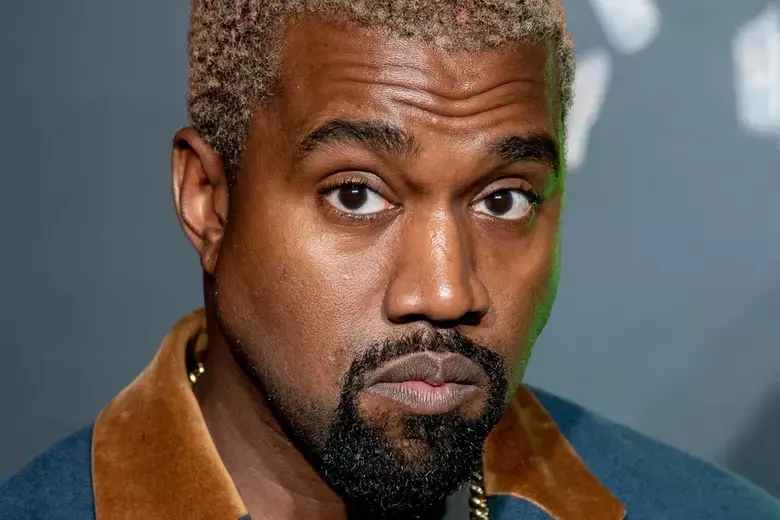
I bought a CD this week. That alone should tell you everything about what Kanye West — now officially Ye — means to me. I haven't owned a physical disc in over two decades. I'm currently searching for a CD player. And I'm not embarrassed about any of it. In fact, I feel something I wasn't quite expecting: joy. A simple, uncomplicated, almost nostalgic joy — the kind that takes you back to simpler times, when music felt like a ritual, when you held something real in your hands and waited for it to arrive.
That CD is Bully, the twelfth studio album by Ye, released on March 27, 2026 — a date that came and went with no fanfare on Spotify, no banner on Apple Music, nothing on streaming at all. So I pulled the trigger fast. I ordered the CD that same day because I had to make sure I would actually be able to hear this album. I wasn't waiting around hoping it would show up somewhere. I had to act. And honestly? I don't regret it for a second. Since then, Bully has made its way to streaming — and I hope everyone goes and listens. But I'm happy I have that disc. I supported the art the way the art asked to be supported.
The Beginning: College Dropout to God Level
Long before the controversies, before the TMZ headlines and the Twitter spirals, before the word "antisemitic" became attached to his name like a shadow — there was just Kanye. A kid from Chicago. A producer with big dreams and a backpack rap delivery who couldn't get a record deal because nobody believed a beatmaker could be a rapper too.
When The College Dropout arrived in 2004, it felt like a declaration. Here was someone who sounded like us — the ones who didn't fit the mold, who were told to sit down and be quiet. He sampled soul records and talked about Jesus and his mama and the price of diamonds. Late Registration deepened the vision. Graduation took it to stadiums. And then came 808s & Heartbreak in 2008, where he stripped everything back after losing his mother, Donda, and ending his engagement — and instead of rapping, he sang. Badly, beautifully, painfully. It was the album that changed pop music forever and almost nobody understood it in real time.
My Beautiful Dark Twisted Fantasy in 2010 is still, by many accounts, one of the greatest albums ever made. It was a maximalist apology — bloated with orchestras and features and a swagger that felt earned. Then came Yeezus in 2013, abrasive and confrontational, the sound of a man tearing down everything he'd built just to see what grew from the rubble. The Life of Pablo in 2016 arrived in chaos — updated mid-release, never quite "finished," the first major streaming-era album to feel genuinely incomplete in a revolutionary way. Ye in 2018 was personal and messy, a diary entry made public. Jesus Is King won a Grammy. Donda was delayed so many times it became a punchline. Vultures 1 and Vultures 2 landed in controversy. And through all of it — the highs, the lows, the breakdowns — he remained the most compelling artist of his generation.

Kim, Yeezy, and the Rise and Fall of an Empire
The relationship between Kanye West and Kim Kardashian was, for a while, the most fascinating celebrity pairing in modern culture. He was the visionary artist; she was the cultural phenomenon. Together, they were a kind of American royalty — four kids, matching outfits, a wedding in Florence. He designed her clothes. She supported his music. They appeared to be, genuinely, each other's biggest fans.
The unraveling was public and painful. Kim filed for divorce in 2021. What followed was a very messy, very visible dissolution — social media posts, public disputes about the kids, a new marriage to Bianca Censori that was itself surrounded by controversy. Kanye's behavior grew increasingly erratic and disturbing. His antisemitic outbursts in late 2022 didn't just damage his reputation — they demolished it. He lost Adidas. He lost Gap. He lost Balenciaga. He lost CAA. He was named Antisemite of the Year by a watchdog organization. The Yeezy sneaker empire, the brand he had spent a decade building into a multi-billion-dollar business, was suddenly untethered — product sitting in warehouses with no distribution partner, a kingdom without a throne.
This is where being a fan got genuinely hard. Because to love the music — and I do, deeply — you had to find a way to hold it separate from the man making it. That's not comfortable, and it shouldn't be. The art doesn't excuse the behavior. The genius doesn't neutralize the harm. But art also lives beyond the artist, and Kanye West's music has meant too much to too many people for too long to be simply abandoned. As a fan, I had to reckon with that. I had to consciously and deliberately separate the man from the artist, and sit with the discomfort of what that meant.

The Delays, the Disdain, and the Art of Making People Wait
If there is one thing that has defined Ye's post-Adidas era as an artist, it is this: he will make you wait. Bully was first teased in 2024. Dates were floated, then missed. The album was described as a concept album recorded partly in Tokyo, partly in isolation. Listening sessions were held, then cancelled, then rescheduled. An early version — Bully V1 — was released as a short film before the actual album. There were "screening versions" and "post Hype versions" and updated cuts. A release date of June 15, 2025 was announced, then postponed. Then July 25. Then September 26. Then finally, emphatically: March 27, 2026.
This is nothing new, of course. The Life of Pablo was updated and re-released multiple times. Donda had multiple listening party events at stadiums where Ye slept inside the venue. Waiting on Kanye has become a sport. But with Bully, the wait felt different — more deliberate, more weaponized. He signed with Gamma, an independent media company, and made the decision that the album would be released physically first: vinyl and CD, available on his Yeezy website. No streaming. Not yet.

Exiled and Then: The Return to American Stages
After his antisemitic spiral in 2022, the major promotion companies — Live Nation and AEG — reportedly and informally barred Kanye West from touring in the United States. He wasn't explicitly banned by any one authority, but the reality was clear: no major venue would book him. No promoter would touch him. The stages he had once commanded — the ones he had filled with an Adidas-branded army of Yeezy sneakers and gospel choirs — were suddenly closed to him.
So he performed elsewhere. He held concerts in China, South Korea, and Mexico during 2024 and 2025. He remained active — building, recording, creating — but always at a geographic remove from the country that made him. The shows abroad were smaller, scrappier, sometimes chaotic. But they kept him connected to an audience that hadn't left.
Then came January 2026: a full-page apology in the Wall Street Journal. In it, Kanye — now fully going by Ye — cited his bipolar disorder and a 2002 brain injury for his past "reckless" behavior. It was remarkable, uncomfortable, and predictably controversial. Was it genuine? Was it strategic? Was it both? Nobody could agree. But something shifted. In March 2026, SoFi Stadium in Los Angeles announced a show for April 3, 2026 — his only Los Angeles date, his return to major U.S. stages. Groups like the Anti-Defamation League condemned the booking. Jewish advocates called SoFi's decision "despicable." And yet the tickets sold.
Bully: The Album That Wouldn't Stream
In the lead-up to March 27, there were listening parties. Real ones, all over the world — Los Angeles, New York City, Chicago, Seoul, Istanbul, the Netherlands, and more. Ye announced them with only hours of notice. Fans showed up. Snippets leaked online, circulated on social media, got discussed and dissected in real time. I was one of the people searching the web in the middle of the night, hunting for 15-second clips of songs I hadn't heard yet, trying to feel some part of the music before the physical copy arrived.
And then the date arrived. March 27, 2026. I opened Spotify. Nothing. I checked Apple Music. Nothing. Tidal. Nothing. The album was out — released through YZY and Gamma — but only if you had ordered a physical copy. Only if you held it in your hands. The streaming world would have to wait. Ye had premiered a livestream of a listening party on YouTube, just after midnight, with Nine Vicious and CeeLo Green in attendance in Atlanta — but the actual album? You had to earn it the old-fashioned way. That has since changed — Bully is now available on streaming platforms — but in that first window, physical was the only way in. And I had already placed my order.
Sonically, from what critics and early listeners have described, Bully sounds like a return to something essential. It reportedly draws heavily from soul sampling — Sam Cooke, The Supremes, Burt Bacharach compositions, classic soul and Latin jazz — in the same vein as his early work. There are AI-assisted vocals and production flourishes that echo 808s & Heartbreak and My Beautiful Dark Twisted Fantasy. It's described as a concept album — introspective, raw, sometimes messy. His son Saint appears in the accompanying short film, directed with Hype Williams. The tracklist — nine to ten songs depending on which version you have — includes tracks like "Preacher Man," "I Can't Wait," "All the Love," and "Losing Your Mind." Features range from Don Toliver and Ty Dolla Sign to CeeLo Green and Peso Pluma.
It's Out. Now I'm About to Listen.
The CD is in the mail — I ordered it the day of the release, before I even knew if streaming was coming. I had to make sure I could hear this album. I pulled the trigger quick and I have zero regrets about that. Now Bully is on streaming, and that's a good thing — I hope every single person goes and gives it a listen. But I'm glad I have the physical. I'm still in the market for a CD player. Do you understand how strange and beautiful that sentence is in 2026? I am looking at portable CD players online. I am thinking about whether I want something sleek and modern or something that looks like it came from 1998. I am, in some small and deeply personal way, going back.
There's something happening here that goes beyond one album or one artist. In an era of infinite content available instantly for ten dollars a month, there is a hunger for something that costs you something. Not money necessarily — though Ye's physical editions weren't cheap — but effort. Attention. The act of waiting. The act of going to find the music rather than having it delivered directly to your ears the moment it drops. Bully, whatever else it is, has forced fans to participate in music again in a way that streaming made optional.
And there is something about listening to a physical CD that is fundamentally different from pressing play on a phone. You hold it. You look at the artwork. You read the liner notes. You press play on track one and you commit, because skipping around feels somehow wrong. It is a return to a little cultural norm from simpler times. The kind of thing I didn't know I missed until I found myself ordering a disc in the same week a man who once defined the future of music decided to go back to the past too.
Conclusion: Still Here, Still Watching
I am not naive about Kanye West. I know who he is. I know what he said. I know the harm those words caused and continue to cause. I am not here to minimize any of that or to tell anyone they should feel comfortable being a fan. That is a deeply personal decision, and reasonable people land in very different places.
What I can tell you is this: the music still gets me. It always has. The College Dropout changed how I listened to hip-hop. 808s & Heartbreak changed how I processed grief. My Beautiful Dark Twisted Fantasy made me feel like anything was possible in art. And now, in 2026, a man I've followed for over twenty years — through his brilliance, his disasters, his transformations, his new name — is making me buy a CD and search for a CD player just to hear what he's made next. That's not nothing. That's actually everything.
Bully is now on streaming — go listen. Seriously, go right now. But my CD is still on its way, and when it arrives, I will find a CD player, I will press play, and I will listen the way we used to listen — fully, deliberately, without shuffle. That's the version of this I was waiting for. Supporting music like this — actually buying it, holding it, waiting for it — is what music needs the most right now. It feels, honestly, like joy.


Comments